Operation Goldboots · Promote P.E.A.C.E.
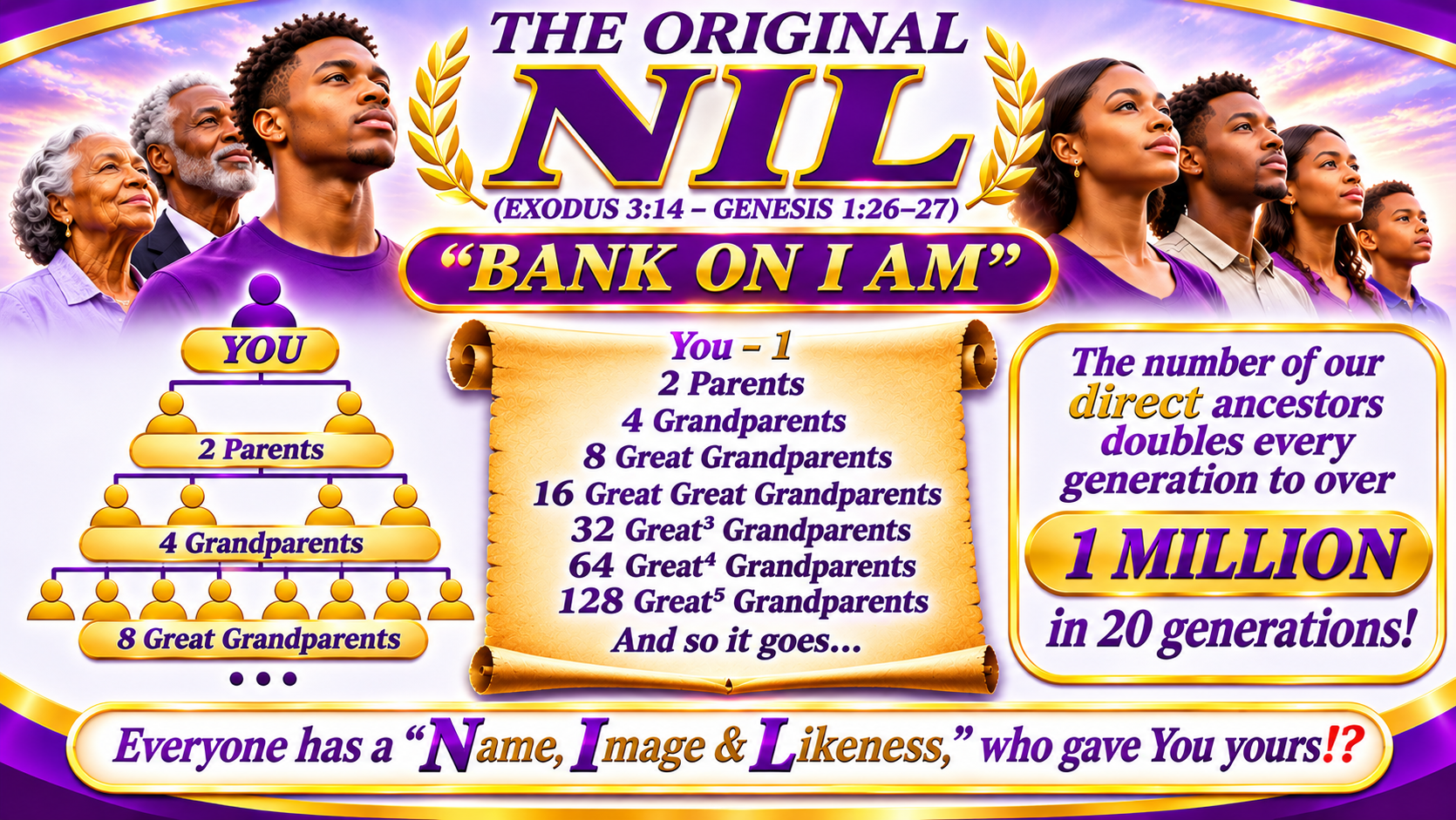
You were born with it.The Original NIL
Your Name, your Image and your Likeness have been yours since the day you were born. Read each lesson, pass each quiz, and build your brand the P.E.A.C.E. way.
Start here
Overview
Everyone has an NIL, not just athletes. This course teaches the true history of NIL, how money and digital money work, the two business tools P.E.A.C.E. uses, and how to teach someone else, safely and inside the rules.
You have a Name, an Image and a Likeness. That is your brand. Learn it, live it, teach 2. A grown-up handles the money.
Your path
- 1Original NIL vs. NIL PolicyEvery age · 20-question quizThe NIL you were born with, and the 2021 rule for college athletes.
- 2P.E.A.C.E. EducationEvery age · 20 modules · 20-question quizCoach Tre's course: save first, USD to USDT to Satoshis, own your keys, keep it crypto.
- 3GO E1ULIFELearn at any age · Join at 18+ · 10-question quizThe AI business tool: what it costs, how it pays, and its rules.
- 4GivBuxLearn at any age · Use at 13+ with a parent · 10-question quizThe rewards and giving app: ages, withdrawals, charity and privacy.
- 5P.E.A.C.E. Volunteer FirefightersEvery age · 10-question quiz · Join links at the endFriend 2 Friend, the volunteer code, your Brand Card, and how to join.
How it works
- Read the lesson, then take its quiz. You need 80% to pass.
- Retake as many times as you need. Every retake has new questions, with the answers in a new order.
- Passing one quiz unlocks the next quiz. You can read every lesson any time.
- Your progress saves on this device only.
Learning Track
Sections 1–5, the quizzes, the Brand Card and the P.E.A.C.E. Education course. No purchase or signup, ever.
Business Track
GO E1ULIFE (18+) and GivBux (13+, and a parent must approve adding money). A separate choice for adults, with its own disclosures.
Section 1 of 5
Original NIL vs. NIL Policy
You got your NIL when you were born. In 2021 a college sports group made a rule about paying college athletes for theirs. The rule did not make your NIL. You had it first.
The Original NIL
- Everyone has one: students, parents, barbers, firefighters, athletes.
- It is your identity and reputation.
- It never expires.
- Name + Image + Likeness = your brand.
The NCAA NIL Policy
- A rule for NCAA college athletes.
- Lets them be paid for their NIL without losing eligibility.
- Started as an "interim" (temporary) policy.
- Still changing. Always check the current rules.
How we got here
- 1991UNLV · Greg Anthony
The point guard who minded his own business
Greg Anthony was the starting point guard when UNLV won the 1990 national championship. He co-founded a T-shirt and silk-screening company called Two Hype and gave up his athletic scholarship, worth about $12,212, so he could run it. He said owning his own company had always been his dream, and his T-shirt earnings paid his tuition.
The NCAA warned UNLV that Anthony could not promote a commercial product. On March 28, 1991, the Sun Sentinel ran the headline "Scholar Athlete NCAA Tells University Guard He Can't Mind His Own Business." Anthony said he left the business that February. The New York Knicks drafted him 12th overall in 1991.
- 2006NCAA Bylaws · Article 12 · Adopted 12/12/06
Bylaw 12.4.4: Self-Employment
Article 12 covers Amateurism and Athletics Eligibility. Bylaw 12.4.4 said a student-athlete could set up their own business, as long as the athlete's
name, photograph, appearance or athletics reputation
was not used to promote it. In plain words: you could be an entrepreneur, but you could not use your own NIL to sell your business.
Other Article 12 rules worked the same way. Bylaw 12.4.1 allowed pay only for work actually performed, at the going rate for that kind of work in that area. Athletes giving paid lessons could not use their name or picture to advertise them.
- 2009O'Bannon v. NCAA · Filed July 2009
Ed O'Bannon sues over his likeness
Ed O'Bannon, a former UCLA basketball star, sued the NCAA, video game maker Electronic Arts and the Collegiate Licensing Company. His point: they were making money from athletes' names, images and likenesses, including in video games, while the athletes got nothing.
On August 8, 2014, Judge Claudia Wilken ruled the NCAA's rules violated federal antitrust law (the Sherman Act). On September 30, 2015, the Ninth Circuit agreed the rules broke antitrust law and let schools give scholarships up to the full cost of attendance, but struck down $5,000 deferred payments. The Supreme Court declined to hear the case on October 3, 2016.
- 2017UCF · Donald De La Haye
A kicker loses eligibility over YouTube
UCF kicker Donald De La Haye was ruled ineligible for earning ad revenue from his YouTube channel. The NCAA said he could keep making videos only if he did not mention being a football player. The self-employment rule in action.
- 2021NCAA v. Alston · Decided June 21, 2021
A West Virginia running back wins 9–0
Shawne Alston, a former West Virginia University running back, filed his case in 2014 along with former Cal athlete Justine Hartman and others. Judge Wilken ruled for the athletes, and the Ninth Circuit agreed in May 2020.
The Supreme Court heard arguments on March 31, 2021 and decided unanimously, 9–0, on June 21, 2021. Justice Neil Gorsuch wrote the opinion under the Sherman Act. The ruling was about education-related benefits, such as laptops, graduate scholarships and paid internships. It was not itself an NIL ruling. Justice Brett Kavanaugh warned that the NCAA's other compensation rules could face the same antitrust problems.
- 7·1·21NCAA Interim NIL Policy · Effective July 1, 2021
Ten days later, the door opens
On June 30, 2021, the NCAA Division I Board of Directors approved an interim NIL policy. Starting July 1, 2021, athletes in Divisions I, II and III could be paid for their NIL, whether or not their state had an NIL law. Several state NIL laws took effect that same day.
- 2025House v. NCAA · Approved June 6, 2025
Schools pay athletes directly
Since July 1, 2025, schools may share up to $20.5 million a year with athletes. Outside NIL deals over $600 are reviewed through NIL Go, run by the College Sports Commission, and must have a real business purpose and fair pay. Pay-for-play is still banned.
High school athletes follow their state association, not the NCAA. In Pennsylvania (PIAA): no school uniform, logo or name in a deal; no alcohol, drugs, gambling or weapons; tell the principal or athletic director within 3 days.
NIL income is taxable income
The IRS Taxpayer Advocate Service says any income from NIL activities is taxable, including non-cash payments like free gear or gift cards. Student-athletes are generally treated as independent contractors, which means self-employed, and may receive a Form 1099. Income must be reported even if no form arrives. A minor's NIL income goes on their own or their parents' return, and it must be reported on the FAFSA.
Self-employment = entrepreneurship. The NCAA allowed it in 2006. The IRS taxes it as self-employment. So why aren't we teaching every student how to be an entrepreneur?
Section 1 quiz
Know the Rules
Section 2 of 5
P.E.A.C.E. Education
Proper Education And Cooperative Economics. Coach Tre's free course: 20 modules in four parts, from US dollars, to USDT, to Satoshis. Open each module below, or take the full course with its videos.
Save first. A Satoshi is a tiny piece of Bitcoin: 100,000,000 make 1 Bitcoin. Pay in USDT, save in Satoshis. Your recovery words are a secret master key. Never share them. A grown-up handles anything real.
Four ways to say P.E.A.C.E.
Proper Education And Cooperative Economics
Foundations: money, Bitcoin and Satoshis.
Proper Education Action Cooperative Economics
Cross the bridge: USD to USDT to Satoshis.
Proper Education Alignment Cooperative Economics
Own your keys: wallets and security.
Proper Education Accountability Cooperative Economics
Privacy, scams, taxes and teaching others.
The 20 modules
Tap a module to open it.
1Money BasicsPart 1
Goal: Save first. Build the habit before you touch any crypto.
- Earn a little, save a little, build a little. Remember the PSFS passbook. The habit matters more than the amount: $5 a week for a year is $260 you didn’t have.
- Emergency fund first. Before any crypto, keep a cash cushion in an FDIC-insured bank account. Start with $500, then grow it toward one month of expenses.
- Pay yourself first. Move savings the day money comes in, not whatever is left at the end of the month.
- Never use money you need. Rent, food, bills and school money stay in the bank. Crypto is only for money you can leave alone for years.
Try it: Pick one weekly savings amount you can keep for 8 weeks, and the day you will move it.
2Know Your Number: A Living WagePart 1
Goal: Know what it really costs your household to live, so you know what you can save.
- Your number, not someone else’s. A living wage is the income a household needs to cover the basics where it lives: housing, food, child care, health care, transportation and taxes.
- It changes by place and family size. One adult in one county needs a very different amount than two adults and two children in another.
- Compare your pay to your number. If you earn more than your living wage, the difference is room to save. If you earn less, protect your cash first.
- Save from the gap, not from the basics. Your Satoshi savings should come from the space between what you earn and what you need.
Try it: Look up the living wage for your county and household size, and compare it with your monthly take-home pay.
3What Is Bitcoin?Part 1
Goal: Understand what Bitcoin is and why its supply matters.
- Digital money no bank controls. Bitcoin has run since January 2009 on a network of computers around the world. No company or government can change its rules alone.
- Only 21 million will ever exist. No one can print more. The dollar, not backed by gold since 1971, slowly loses buying power to inflation.
- Bitcoin is property. The IRS treats it as property (Notice 2014-21), like land or gold, not like cash.
- The price moves a lot. Bitcoin’s dollar price can rise or fall by half. That is why savings come first and you only use money you can leave alone.
Try it: Explain to one person, in two sentences, why there will only ever be 21 million bitcoin.
4Satoshis: Count Sats, Not DollarsPart 1
Goal: Understand the smallest piece of Bitcoin, and why we count sats.
- 1 bitcoin = 100,000,000 sats. A Satoshi (sat) is the smallest piece of Bitcoin, named after its creator, Satoshi Nakamoto. You can own sats without owning a whole bitcoin, the way you can own pennies without a $100 bill.
- Your sat count does not change with price. If you hold 100,000 sats today, you still hold 100,000 sats after the price falls or rises. Only the dollar value moves.
- Count your savings in sats. Set goals in sats: 10,000, then 100,000, then 1,000,000. Every $5 adds more sats to the stack.
- This is not stocks. You are saving in a scarce digital property, not trading. Stacking sats is a habit, like the PSFS passbook.
Try it: Convert $10 into sats at today’s price. Then work out the dollar value if the price fell 50% or rose 50%. Notice your sat count never changes.
5Why Save in SatoshisPart 1
Goal: Understand Bitcoin as a long-term savings account, and its risks.
- Think in years, not days. People who save in Bitcoin plan to hold for years. HODL means Hold On for Dear Life: don’t panic-sell in a dip.
- Scarce savings. Because the supply is capped, many people use Bitcoin to save the way earlier generations saved in gold.
- Risk is real. The dollar value can fall hard and stay down for a long time. Never put in money you will need soon.
- Small and steady wins. A little every week, held a long time, is the habit. Not one big bet.
Try it: Write your sat goal for the next 12 months and how many sats you will add each week.
6USDT: The Digital DollarPart 2
Goal: Understand the stablecoin that is the bridge between dollars and Satoshis.
- What it is. USDT is a stablecoin issued by the company Tether. It is designed to stay worth $1.00.
- Why we use it. USDT moves quickly and cheaply on networks like Solana, and it is the bridge between US dollars and Satoshis.
- Not a bank deposit. USDT is not FDIC-insured. Its value depends on Tether holding enough reserves, and it has briefly slipped below $1.00 during market stress.
- Spend and pay in USDT; save in Satoshis. Promote PEACE uses USDT only for payments. Satoshis are for savings only.
Try it: Look up the fees on a $40 purchase of USDT and calculate how much USDT actually arrives.
7Bridge Step 1: Exchanging USD for USDTPart 2
Goal: Understand the first step: turning dollars into digital dollars.
- Dollar for dollar. $65 becomes about 65 USDT, minus fees. You are swapping one kind of dollar for a digital dollar.
- Your value should stay the same. Because USDT is designed to hold $1.00, this step is about moving your money onto the bridge, not about gaining or losing value.
- Where it happens. Usually on an exchange or inside your wallet app with a debit card or bank transfer. Read every fee before you confirm.
- Keep a little SOL for fees. On Solana, keep $1 to $2 of SOL in your wallet to pay network fees.
Try it: Write down the three fees that can show up when you buy USDT: card fee, network fee and spread.
8Bridge Step 2: Exchanging USDT for SatoshisPart 2
Goal: Understand the second step: turning digital dollars into savings.
- This is a trade, not a swap of dollars. Exchanging USDT for Satoshis trades a dollar-pegged token for a scarce property whose dollar price moves.
- Price risk starts here. The moment you hold sats, your dollar value can go up or down. Your sat count does not change.
- It is a taxable event. For federal taxes, trading USDT for Satoshis counts as disposing of property. Record the date, amount and dollar value.
- Then move your sats home. Don’t leave long-term savings on an exchange. Move them to a wallet where you own the keys.
Try it: Pretend you trade 65 USDT for sats. Write down the date, the sat amount and the dollar value: that is your tax record.
9USD → USDT vs. USDT → SatsPart 2
Goal: See the two steps side by side so you never mix them up.
- Two different steps. Step 1 moves dollars onto the bridge. Step 2 turns digital dollars into savings.
- Different risk. Step 1 should keep your value steady. Step 2 puts your value on Bitcoin’s moving price.
- Different purpose. USDT is for paying. Satoshis are for saving.
| USD → USDT | USDT → Satoshis | |
|---|---|---|
| What it is | Dollars become digital dollars | Digital dollars become Bitcoin savings |
| Value | Designed to stay at $1.00 | Dollar value rises and falls; sat count stays the same |
| Purpose | Paying and moving money | Long-term savings |
| Taxes | Buying with dollars sets your starting value | A taxable trade; keep a record |
| Where it ends up | Your warm wallet, ready to use | Your cold wallet, for saving |
Try it: Explain the difference between the two steps to a family member in your own words.
10Build the Habit: Little and OftenPart 2
Goal: Stack sats on a schedule instead of guessing the price.
- Dollar-cost averaging. Buy the same small amount on the same day every week or month, whatever the price. Some weeks you get more sats, some fewer.
- Ignore the noise. Nobody knows next week’s price. A schedule removes fear and guessing.
- Fees matter on small buys. A $3 fee on a $10 purchase is 30%. Buy a little less often if fees eat too much.
- Keep learning. The more you understand, the calmer you stay when the price moves.
Try it: Choose your amount and your day, and write them on your calendar for the next 8 weeks.
11Hot, Warm and Cold WalletsPart 3
Goal: Know who holds the keys in each kind of wallet.
- The temperature tells you who holds the keys. Hot: the company holds them. Warm: you hold them on your phone. Cold: you hold them offline.
- Simple rule. Buy on the exchange (hot), spend from your phone (warm), save in the cold wallet.
- Never store savings in a hot wallet. If the company freezes, fails or gets hacked, you can lose access.
The company holds your keys. You log in with an email and password; there are no recovery words.
Use it for: buying, then moving out.
A self-custody app on your phone, like Phantom. You hold the keys, protected by 12 or 24 recovery words.
Use it for: small amounts and paying in USDT.
A hardware wallet kept offline, with your recovery words stamped on metal.
Use it for: long-term Satoshi savings.
Try it: List where your money is today and label each place hot, warm or cold.
12Own Your KeysPart 3
Goal: Understand why whoever holds the keys owns the money.
- Not your keys, not your coins. If a company holds your keys, you own a promise from that company, not the Bitcoin itself.
- History teaches. Exchanges and lenders like Mt. Gox (2014), Celsius (2022) and FTX (2022) froze or lost customers’ money.
- Self-custody means responsibility. No bank can reset your password. If you lose your keys and recovery words, the money is gone.
- Your keys, your savings. Owning your keys is how you truly own your Satoshis.
Try it: Name every place you hold crypto today, and write who holds the keys for each one.
13Your Recovery Words: The Master KeyPart 3
Goal: Protect the 12 or 24 words that control your money.
- The words are the money. Anyone with your recovery words can take everything, from anywhere in the world.
- Stamp them on metal. Paper can get wet, tear or burn. Stamp or engrave the words on a steel or titanium backup before you add any stablecoins.
- Never digital. No screenshots, photos, notes apps, email, cloud or texts. Anything online can be hacked.
- Never share them. Not with a coach, a friend or “support,” not even Coach Tre. Anyone who asks is trying to steal.
- Plan for family. Decide how a trusted person could recover your savings if something happened to you, without sharing the words today.
Try it: Choose where your metal backup will be kept, somewhere safe, private and away from fire and water.
14Set Up Your Warm Wallet SafelyPart 3
Goal: Install Phantom correctly and prove your backup works.
- Official source only. Use phantom.com, Coach Tre’s invite link below, or the Apple and Google app stores. Fake wallet apps and ads are common.
- Write, then stamp. Write the recovery words while you set up, move them to metal the same day, then destroy the paper.
- Test your backup. Restore the wallet on a second device to prove your words work, before you add money.
- Test before you trust. Send a tiny amount first, and check the address and network. Ignore surprise tokens and links in your wallet; they are often traps.
New to crypto? Start with a Phantom wallet
A free warm wallet for your phone: you hold your own keys. Secure your recovery words on metal before you add any stablecoins.
Get Phantom with Coach Tre’s Invite →Coach Tre’s referral link.
Try it: Install Phantom, stamp your words on metal, and restore on a second device, all before adding any USDT.
15Move Your Savings to Cold StoragePart 3
Goal: Keep long-term Satoshis offline, out of reach of hackers.
- What a cold wallet is. A small hardware device that keeps your keys offline. It signs transactions without exposing your keys to the internet.
- Buy only from the maker. Order directly from the maker’s official website. Never buy used, from a reseller, or one that arrives with recovery words already filled in.
- Send a test first. Move a small amount, confirm it arrived, then move the rest. Check every character of the address.
- Same rules for its words. Your cold wallet has its own recovery words. Stamp them on metal and keep them private.
Try it: Write your plan: at what sat amount you will move savings from your warm wallet to cold storage.
16Keep It “Crypto”: Tell No OnePart 4
Goal: Protect yourself by keeping how much you hold private.
- Crypto means hidden. The word comes from the Greek kryptos, meaning “hidden.” Keep your holdings hidden too.
- Never say how much you have. Not at work, not at church, not at the cookout, not online. Talk about the lesson, never your balance.
- No screenshots of your balance. Don’t post wallet screenshots, sat counts or gains. Scammers and thieves look for them.
- Real-world danger. People known to hold crypto have been targeted by scams, threats and even break-ins. Privacy is protection.
- Teach the habit, not the amount. You can teach someone how to stack sats without ever telling them your number.
Your balance is your business.
Share the lesson. Keep the number crypto.
Try it: Check your social media and delete any post that shows a balance, a wallet or an amount you hold.
17Spotting ScamsPart 4
Goal: Protect yourself and your family from bad deals, including ones from people you trust.
- Red flag: guarantees. “You can’t lose” or guaranteed returns. Nothing is guaranteed.
- Red flag: pressure. “Only a few spots left” or “decide today.” Good decisions can wait 24 hours.
- Red flag: your recovery words. Anyone asking for your words, or to log into your wallet “to help,” is stealing.
- Red flag: send crypto to get more back. Giveaways that ask you to send first are always scams.
- Five questions for any opportunity. Who runs it? Would I buy the product with no commission? What does it cost every month, and how do I cancel? Who holds the keys? Can I walk away with my money and relationships intact?
Try it: Run one real offer, from social media or a friend, through the five questions. Including this one.
18Taxes and RecordsPart 4
Goal: Stay right with the IRS from day one.
- Crypto is property for federal taxes. IRS Notice 2014-21 treats virtual currency as property, not currency.
- Trading USDT for Satoshis is taxable. It counts as disposing of one property for another, even if no dollars come out.
- Commissions are income. Crypto or dollars received for referrals or sales are taxed at their dollar value the day you receive them.
- Keep records. For every transaction: date, amount, dollar value and what it was for. Answer the digital-asset question on Form 1040 honestly every year.
Try it: Start a spreadsheet with those four columns and log one test transaction. When in doubt, ask a tax professional.
19Borrow, Don’t Sell (Adults)Part 4
Goal: Understand using sats as collateral, and its risks, so you never have to sell your property.
- How it works. You lock Bitcoin with a lender, receive dollars or USDT, and repay with interest. When it’s paid, your Bitcoin comes back. Coach Tre used this to pay for his Life Memberships in February 2021.
- Loan-to-value (LTV). Loan ÷ collateral. A $1,000 loan against $4,000 of Bitcoin is 25% LTV. Lower is safer.
- Liquidation. If the price falls too far, the lender sells your Bitcoin: a forced sale at the worst time.
- Know your lender. Some crypto lenders went bankrupt and froze customers’ collateral. Get the rate, liquidation level and rules in writing.
Try it: For a $1,000 loan at 25% LTV, work out the collateral you’d need ($4,000).
20Learn · Do · TeachPart 4
Goal: Pass it on, two by two. That is Cooperative Economics.
- Learn. Finish all 20 modules and pass the quiz.
- Do. Save first, cross the bridge (USD to USDT to Satoshis), own your keys and stamp your words on metal.
- Teach. Show two family members or friends how to Learn, Do and Teach, without ever sharing your balance.
- Two by two. Like Genesis 7: “There went in two and two.” Strong members build strong families and strong organizations.
Try it: Write the names of the two people you will teach, and the date you will start.
Learning is free for every age. Anything with real money, wallets or accounts is for adults 18+. Under 18, a parent or guardian handles it. Education only, not financial, legal or tax advice.
Section 2 quiz
PEACE Readiness Quiz
The same 20-question quiz as the course: one question from each module topic, 80% to pass. Each retake asks a different version of every question, in a new order.
Section 3 of 5
GO E1ULIFE
GO E1U is an AI business platform run by GOLDEN HOLDING UNLIMITED INC. It is a Business Track tool for adults 18+. Anyone can learn about it; only adults can join.
GO E1U is a grown-up computer tool that helps businesses talk to customers with AI. Its own rules say children cannot sign up. You can still learn how it works.
What you get
The AI Workspace costs $25 a month: AI agents, an inbox, contacts, a knowledge base, call records, the Ai Biz Box, sharing links and a free song. You can pause it any time. Setup packages add more tools. Levels stack, so buying a level includes every level below it, plus a 25% admin fee.
| Package | Setup (all levels) | Due today, new | Adds |
|---|---|---|---|
| Go Chat | $25 | $56.25 | Chat agents, website chat, knowledge bases |
| Go Voice | $125 | $181.25 | Voice agents, phone number, booking |
| Go Reach | $625 | $806.25 | Outbound calls and texts, landing pages |
| Go Studio | $1,625 | $2,056.25 | Video agent with your face and voice |
| Go Agency | $4,125 | $5,181.25 | Client workspaces, custom branding |
| Go Brand | $8,125 | $10,181.25 | Custom domain, white-label help center |
"Due today" includes the first $25 month. Prices from GO E1U's packages page, November 8, 2026.
How GO says it pays
- Packages: a 2-wide, 2-deep matrix that pays when it fills, then cycles.
- Subscriptions: a 3-wide, 12-deep structure that pays each month while people stay subscribed.
- Crypto card: a share of a 3% card transaction fee.
| Rank | Requirement |
|---|---|
| Go Getter | An active subscription |
| Go Builder | 2 direct referrals who each get 2 active |
| Go Leader | 4 direct referrals who reach Go Builder |
| Go Partner | 4 direct referrals who reach Go Leader |
Of 81,105 people who activated a package, about 13% ever earned $100 or more, and about 1% earned $1,000 or more. GO's Terms say: "Affiliate earnings are not guaranteed," and rank, placement, examples and projections "are not promises of income."
Rules from GO's Terms and Privacy Policy
- Adults only. Members must be able to sign a binding agreement, which is 18 in Pennsylvania. The Privacy Policy says the platform is not intended for children.
- Pay GO directly. Affiliates may not collect payments into a personal account or wallet. Blockchain payments can be impossible to reverse.
- No fake results. "Do not create fake reviews, fake customer stories, fake earnings, or fake results."
- AI tells the truth about itself. Agents say they are AI in their first reply, and that cannot be turned off. Agents may not give medical, legal, financial or safety advice.
- Songs: a gift song is for personal use only. Ads need a paid jingle license, and jingles are not guaranteed to be unique.
- Calls may be recorded. In Pennsylvania, everyone on a call must agree before it is recorded, so voice agents should say so.
- BIX IB Portal: opting in shares your name, email, phone and upline placement with IB Portal, run by Tag Markets. Placement cannot be moved later.
- Disclose. Anyone sharing a GO link that pays them must say so next to the link.
Section 3 quiz
GO E1ULIFE
Section 4 of 5
GivBux
GivBux is a rewards payment app from GivBux, Inc. in Las Vegas, Nevada. You can pay participating merchants, send eGifts, and give part of every purchase to a charity you choose.
GivBux is like a gift card on a phone that also helps a charity. You have to be 13 to use it, and a grown-up must say yes before any money goes in. Children ages 9–11 just learn how it works.
Ages
| Age | What GivBux allows |
|---|---|
| Under 13 | Not allowed to use the app |
| 13–17 | Send, receive and spend. Adding money needs a parent or guardian's consent. |
| 18+ | Buy Rewards with a card in your own name, and use every feature |
How the money works
- 1 Reward = $1 to spend at participating merchants. GivBux says it has over 100,000 merchant locations and names Uber as a partner.
- You can buy up to $9,999 of Rewards in 24 hours, and send up to $10,000 a day to one person, before ID is required.
- Only earned Rewards can be withdrawn, at a 10% discount with a $100 minimum: a $100 withdrawal pays $90. Rewards you bought or were sent can only be spent.
- Balances sit in pooled bank accounts in GivBux's name. GivBux keeps the interest. The Terms do not say balances are FDIC insured.
- No prepaid or gift cards to add money, and no using the app just to earn points.
Giving
- You choose a charity and the percentage of each purchase it gets.
- Pick a charity on day one. If you don't, your Charity Rewards go each quarter to one of GivBux's top 10 charities, after notices 30 days and 3 days before.
- You can donate to 501(c)(3) charities and approved causes such as booster clubs and school programs. Booster club gifts support the program, never individual athletes' NIL deals.
Risks and rules
- Fraudulent sends can mean loss with no recourse. Unclaimed sends cancel after 3 days. Only send to people you know.
- GivBux may take back money it is owed from your balance, linked bank or card without notice, and may close an account for any reason.
- Deleting your account takes 7 days, and your balance must be zero first.
- GivBux does not withhold taxes for you. Keep records.
- Your dispute rights come from the card or bank you used to add money.
- Invitations can earn the sender rewards, so adults must say "paid link." Students never send invitations.
Privacy
- GivBux says it does not sell your personal information.
- It keeps transaction records for at least 7 years.
- If you allow contacts access, it reads your address book on your phone but does not upload it.
- Its AI assistant, GivBux SI, sees what you type plus your name and balance. Anthropic processes those messages, and GivBux staff may review them.
- You can turn off location, contacts, camera and microphone access in your phone's settings.
Section 4 quiz
GivBux
Section 5 of 5
P.E.A.C.E. Volunteer Firefighters
Founded by Coach Tre, a retired firefighter and disabled American veteran. Volunteer firefighters protect their neighbors. P.E.A.C.E. Volunteer Firefighters protect them from money fires: scams, debt and bad deals.
I learn it. I live it. I teach 2. When something about money feels hot, I Stop, Check and Ask my grown-up.
Friend 2 Friend
Start with someone you trust. Learn together. Then teach 2 people what you learned, and help them teach 2. We measure success by how many people you teach to do this without you, never by how many you sign up. Teaching never requires selling, buying or signing anyone up.
Money fire safety
Stop
Don't rush. Real opportunities wait while you think.
Check
Check the facts, the rules and the address before any money moves.
Ask
Ask a parent, a guardian, or a school compliance office. Children say: "Ask my grown-up."
The volunteer code
- Learning is free. No one buys or joins anything to learn or pass.
- Children never pay, buy, join, sign or share links. A grown-up handles the money.
- No personal information from anyone under 13 without a parent's permission. Never collect anyone's Social Security number.
- Never promise income. Share only the company's own record, like GO's 13% and 1%.
- Say "paid link" right next to any link that can pay you, and say it out loud in videos.
- Buyers pay the company directly, never you or your wallet.
- College athletes report paid deals through their compliance office; deals over $600 go to NIL Go.
- Pennsylvania high school athletes tell the principal or AD within 3 days, and never wear school uniforms or logos in a deal.
- Credit games and tools to their owners. Never copy their material.
- When unsure, Stop, Check and Ask before you act.
Build your Brand Card
Your Original NIL on a digital card. Your name and photo stay on this device and are never sent anywhere.
- Good at
- …
- I help people by
- …
- Learning
- …
- My name stands for
- …
- Find me
Section 5 quiz
Volunteer Firefighters
Join
Join P.E.A.C.E. Volunteer Firefighters
All 5 sections passed
Great work, Volunteer!
Show this page to your parent or guardian. Anyone under 18 doesn't join, pay or share links. Keep learning, and teach 2.
P.E.A.C.E. Education course
The free 20-module course: Satoshis, USDT and owning your keys.
GO E1ULIFE membership
AI Workspace with agents, the Ai Biz Box and a free song. Pause any time.
Paid link. Coach Tre is a GO E1U member and earns a commission if you join through this link. Pay GO E1U directly, never a person. GO's own record: about 13% of package buyers ever earned $100 or more. Affiliate earnings are not guaranteed.
GivBux
Pay, send eGifts and give to a charity you choose. Invitation code: @ppc365
Paid link. Coach Tre earns GivBux rewards when people he invites make purchases. Pick a charity on day one.
Both business tools are optional. College and high school athletes: check with your compliance office or athletic director before any paid deal. Education only, not financial, legal or tax advice.